
Restoring American Freedom Train No. 1
A Case Study in Steam Locomotive Cosmetic Restoration
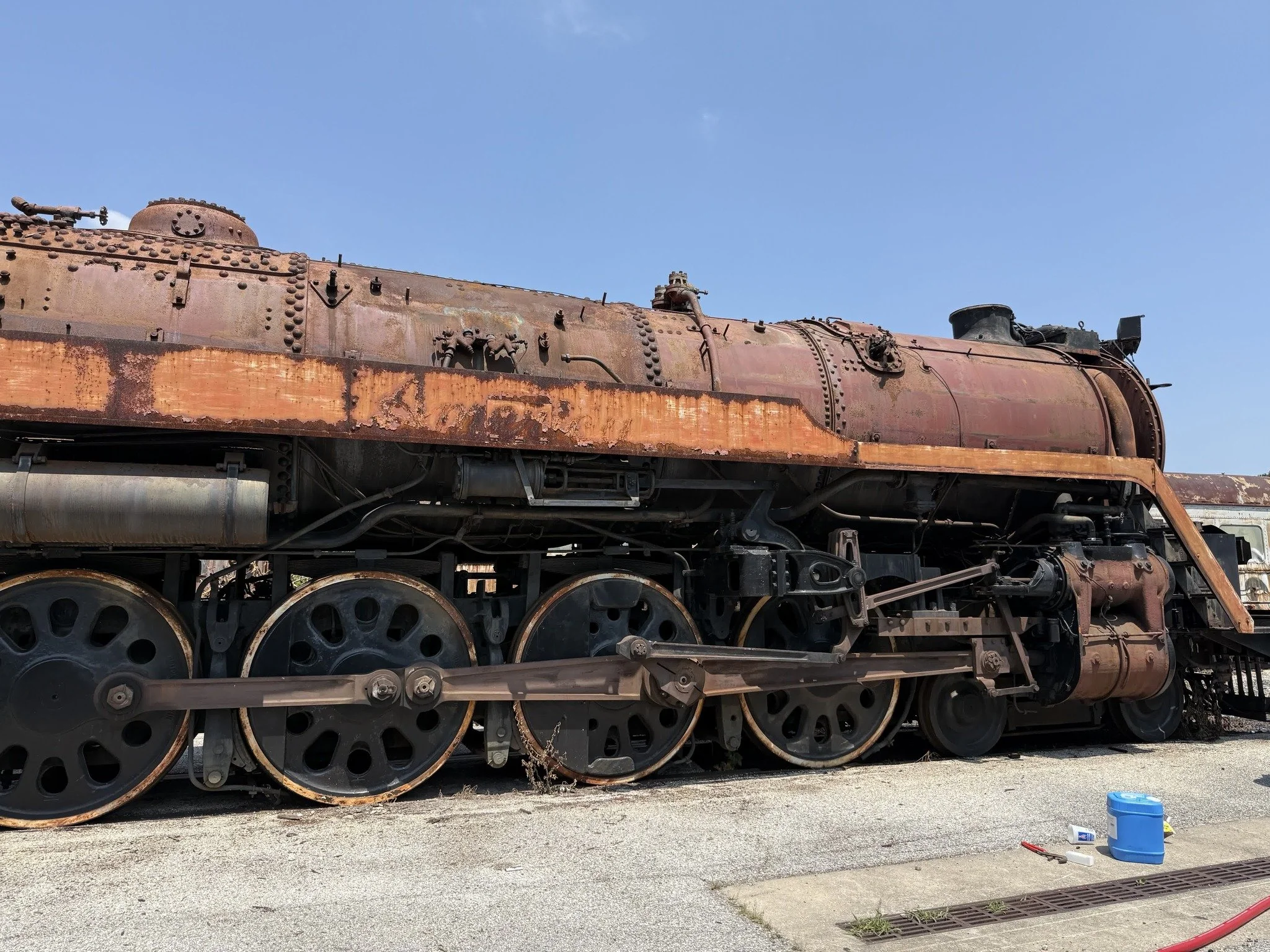
BALTIMORE, MD – From 1975 to 1976, a red, white, and blue exhibition train traveled from coast to coast, drawing millions of visitors who came to see the nation’s history on wheels. At the head of the American Freedom Train, through much of its eastern journey, was a massive steam locomotive wearing a simple but powerful cab number: No. 1. It was the locomotive’s most prestigious assignment, but a roundhouse fire in 1979 ended what had been a promising resurrection. Traded for another locomotive, the engine came to rest at the B&O Railroad Museum in Baltimore in a variation of its most prominent Freedom Train colors. But time, weather, and decades of outdoor display had left their mark.
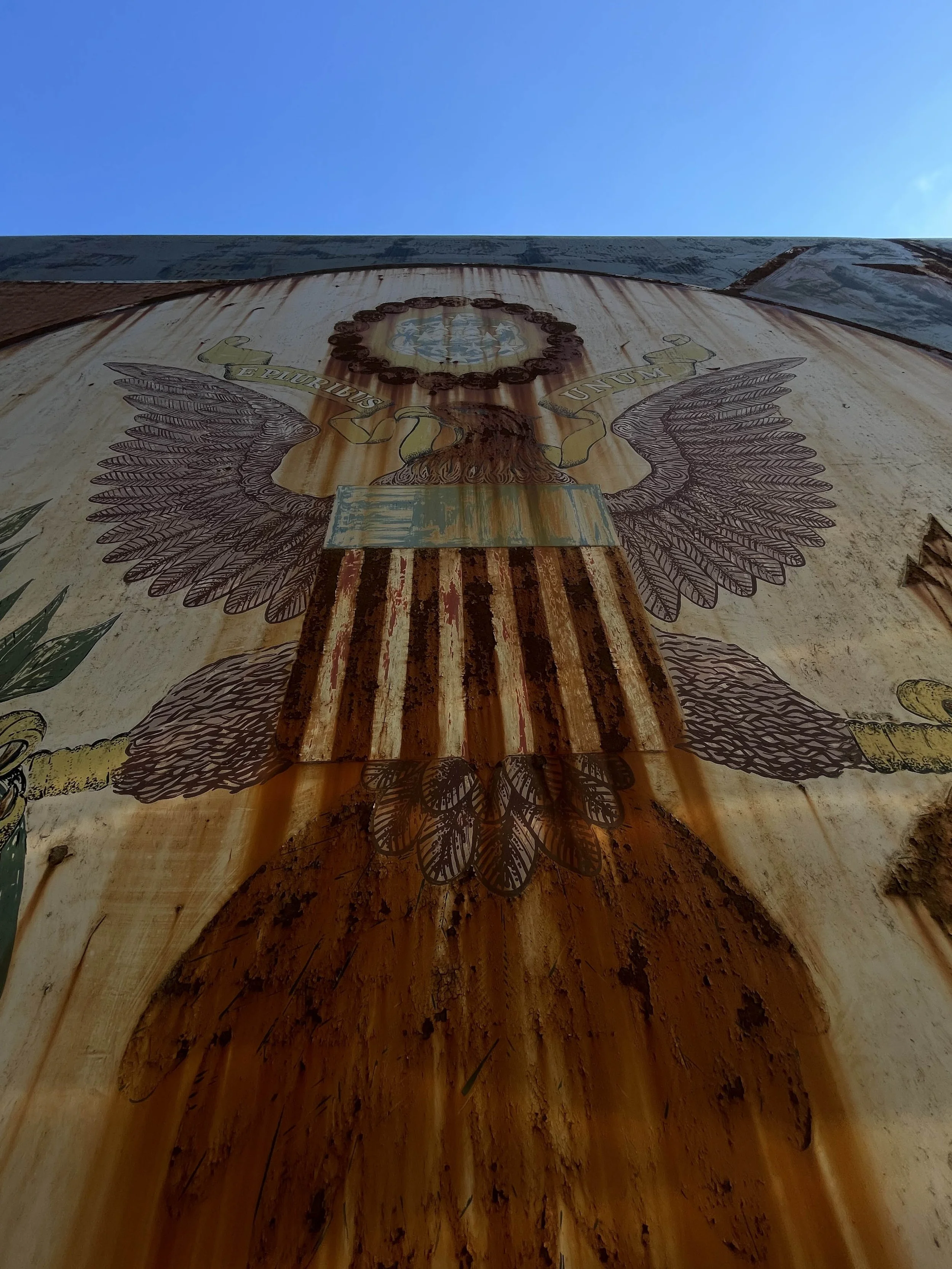
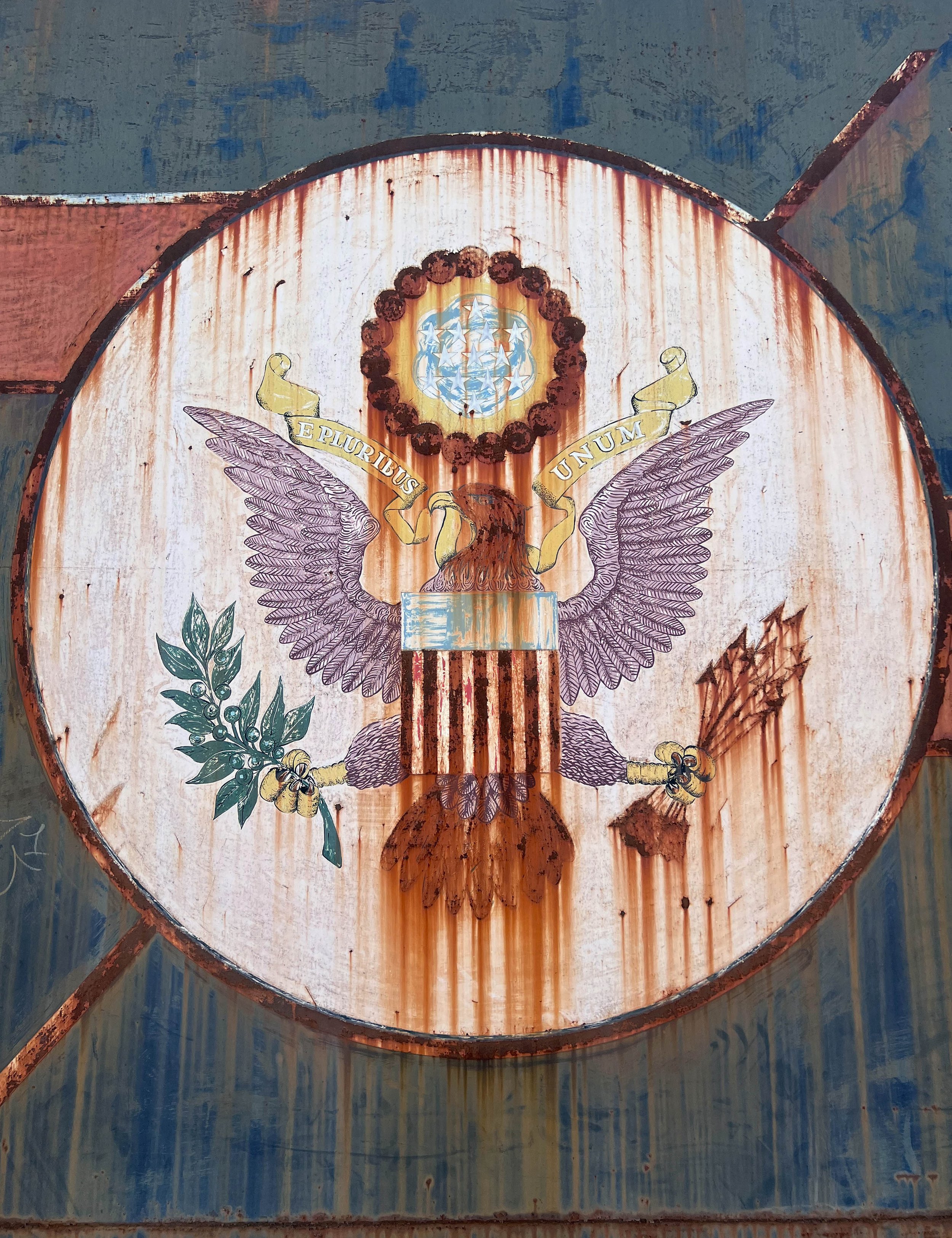
The Great Seal of the United States during a site visit in 2024.
Over five months in 2025, a restoration team led by FMW Solutions has carefully returned the locomotive to the appearance Americans remember — one bolt, panel, and brushstroke at a time. The project marks the culmination of a multi-year effort to return the locomotive to the patriotic appearance it carried while leading one of the most recognizable traveling exhibitions in American history.
The American Freedom Train crossed the United States behind steam and steel, carrying a 26-car rolling museum of historic artifacts during the nation’s Bicentennial celebration. Millions of Americans lined railroad rights-of-way and crowded station platforms to watch the train pass through their communities.
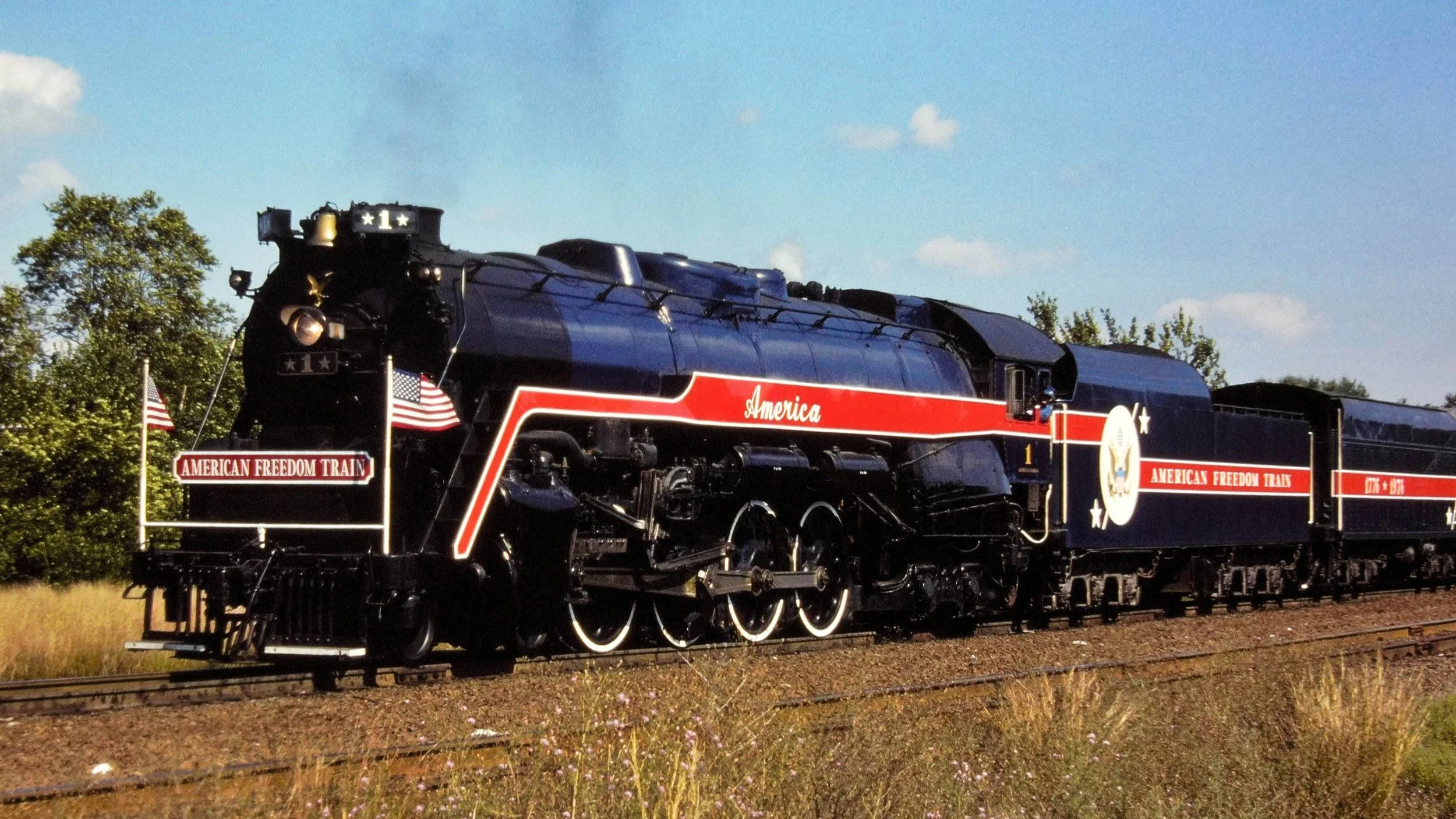
AFT No. 1 courtesy of Matthew Bolyard Collection
FROM READING FREIGHT ENGINE TO NATIONAL SYMBOL
The locomotive began life decades earlier as Reading Company No. 2037, constructed by the Baldwin Locomotive Works in 1923. In 1945, it was rebuilt into one of Reading’s formidable T-1 class 4-8-4 steam locomotives, renumbered 2101 and assigned to heavy freight service across the northeastern United States.
Following the end of the steam era, the locomotive sat idle until it was dramatically revived in 1975 for the American Freedom Train project. In one of the most remarkable stories in railroad preservation, a team of steam specialists renovated the locomotive in just 30 days, transforming a scrapyard relic into a mainline locomotive capable of hauling the Bicentennial exhibition train. The achievement became known among railroaders as the “30-Day Miracle.”
Renumbered simply No. 1, the locomotive hauled the Freedom Train across the eastern United States before handing the exhibition consist to Southern Pacific Daylight locomotive No. 4449 in Chicago, a locomotive whose size had been deemed it too large to run on many eastern routes, thus setting the stage for 2101’s transformation.
After the Bicentennial celebration concluded, the locomotive went on to power the Chessie Steam Special excursions before suffering severe damage from the roundhouse fire. Over the decades that followed, however, the Maryland climate gradually took its toll.
WHAT THE RESTORATION TEAM FOUND
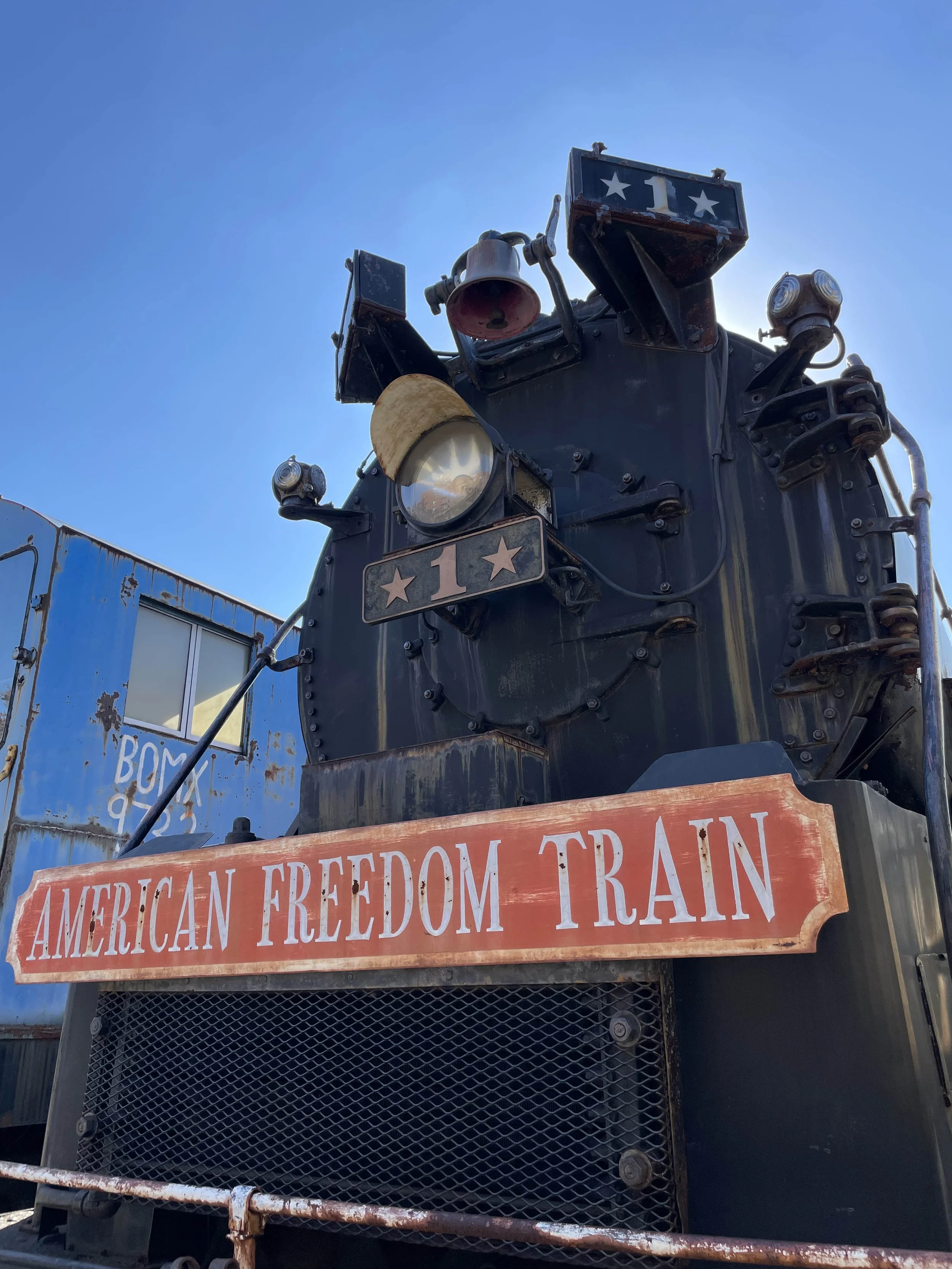
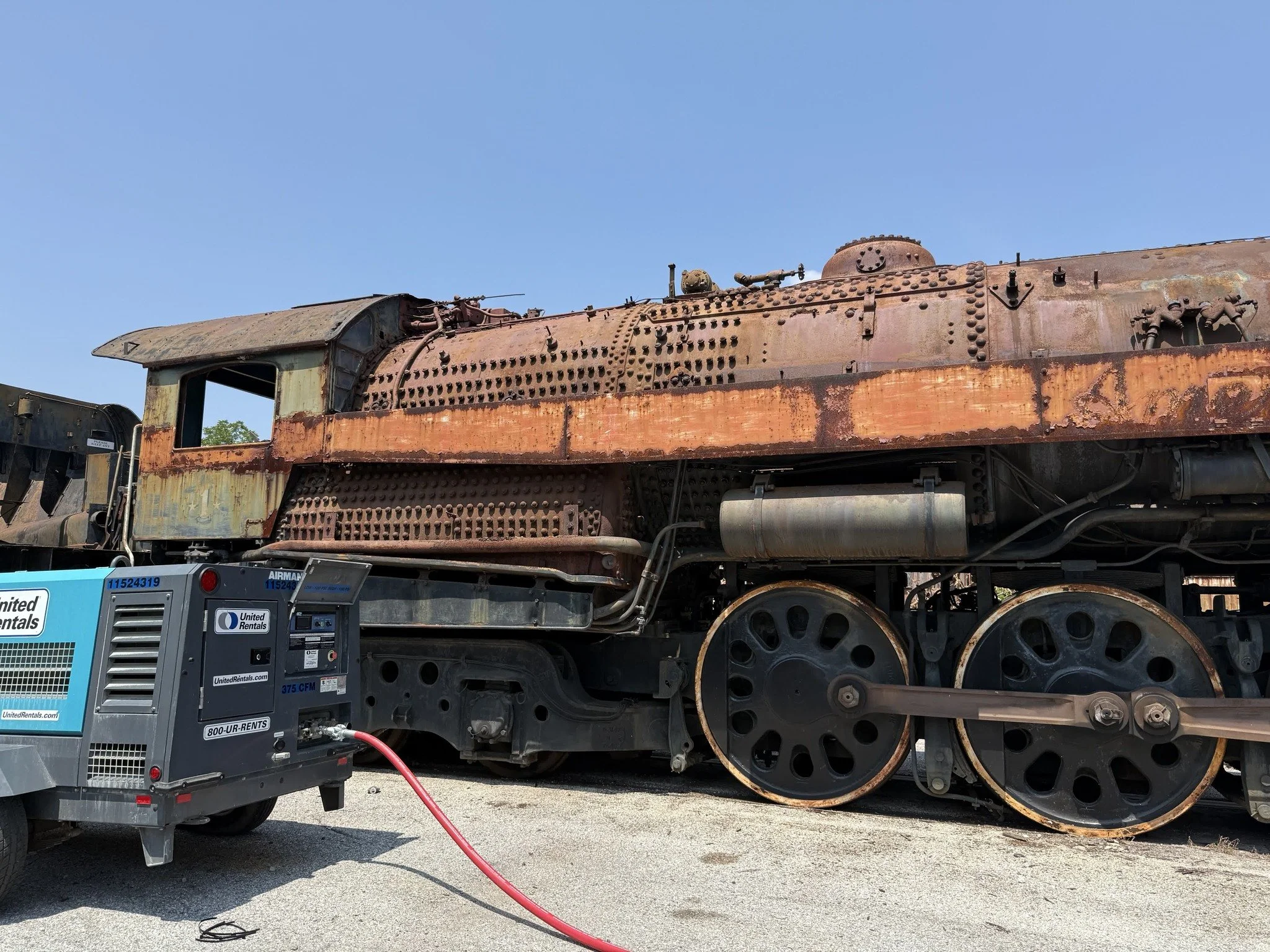
When FMW Solutions arrived in Baltimore to begin the rehabilitation effort, the locomotive still retained an echo of its distinctive Freedom Train identity, but years of exposure had left its mark. The paint had faded and weathered. Protective coatings had deteriorated. Exterior sheet metal components required stabilization, and portions of the locomotive’s cosmetic structure needed repair or replacement.
The mission of the project was clear: return the locomotive to its historic Freedom Train appearance while preserving as much original fabric as possible.
STABILIZING THE LOCOMOTIVE
As with most large-scale historic locomotive preservation projects, the work began with stabilization and preparation. FMW coordinated the removal of legacy insulation materials and oversaw the media blasting of key exterior surfaces to bare metal. This process allowed the steel structure of the boiler, cab, smokebox front, and tender to be inspected and prepared for new protective coatings. Removing decades of coatings also allowed the restoration team to identify areas requiring repair before reconstruction could begin.
DISASSEMBLY AND DOCUMENTATION
No. 1’s skin was brittle. FMW crews removed the locomotive’s boiler jacketing, skirting panels, piping runs, domes, and numerous appliances. Each component was carefully documented and labeled so that salvageable parts could be restored or used as templates for fabricating replacement components. A half dozen new pieces would be constructed.
This stage of the project revealed the true condition of the locomotive’s exterior systems and allowed the team to determine which elements could be preserved and which required replacement.
FABRICATION AND RECONSTRUCTION
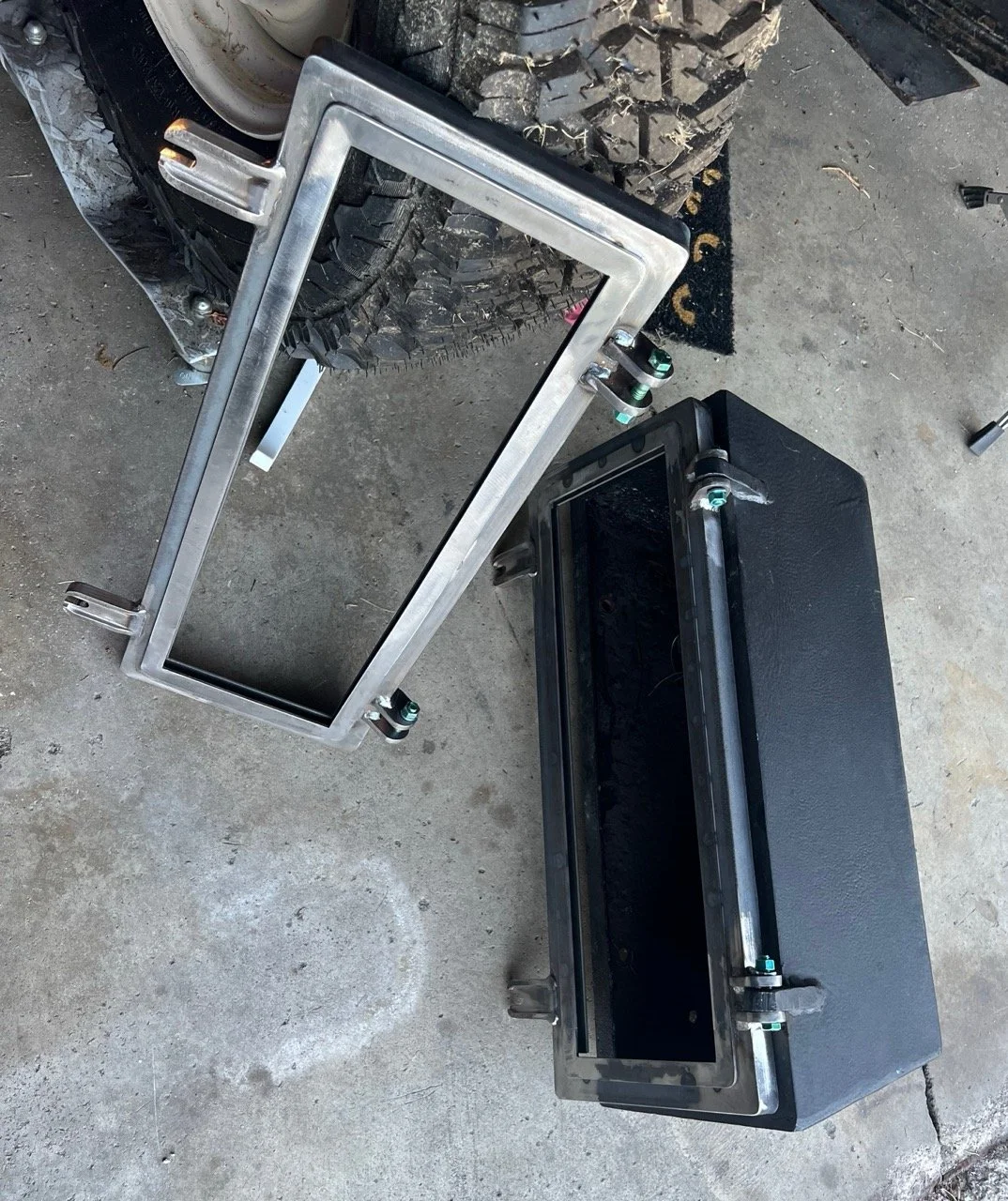
Once the locomotive had been opened up, the rebuilding process began. Original components were restored wherever possible, while deteriorated pieces were recreated using surviving parts and archival references as patterns. Fabrication work included replacement boiler jacketing sections, skirting panels, handrails, piping runs, and numerous cab components.
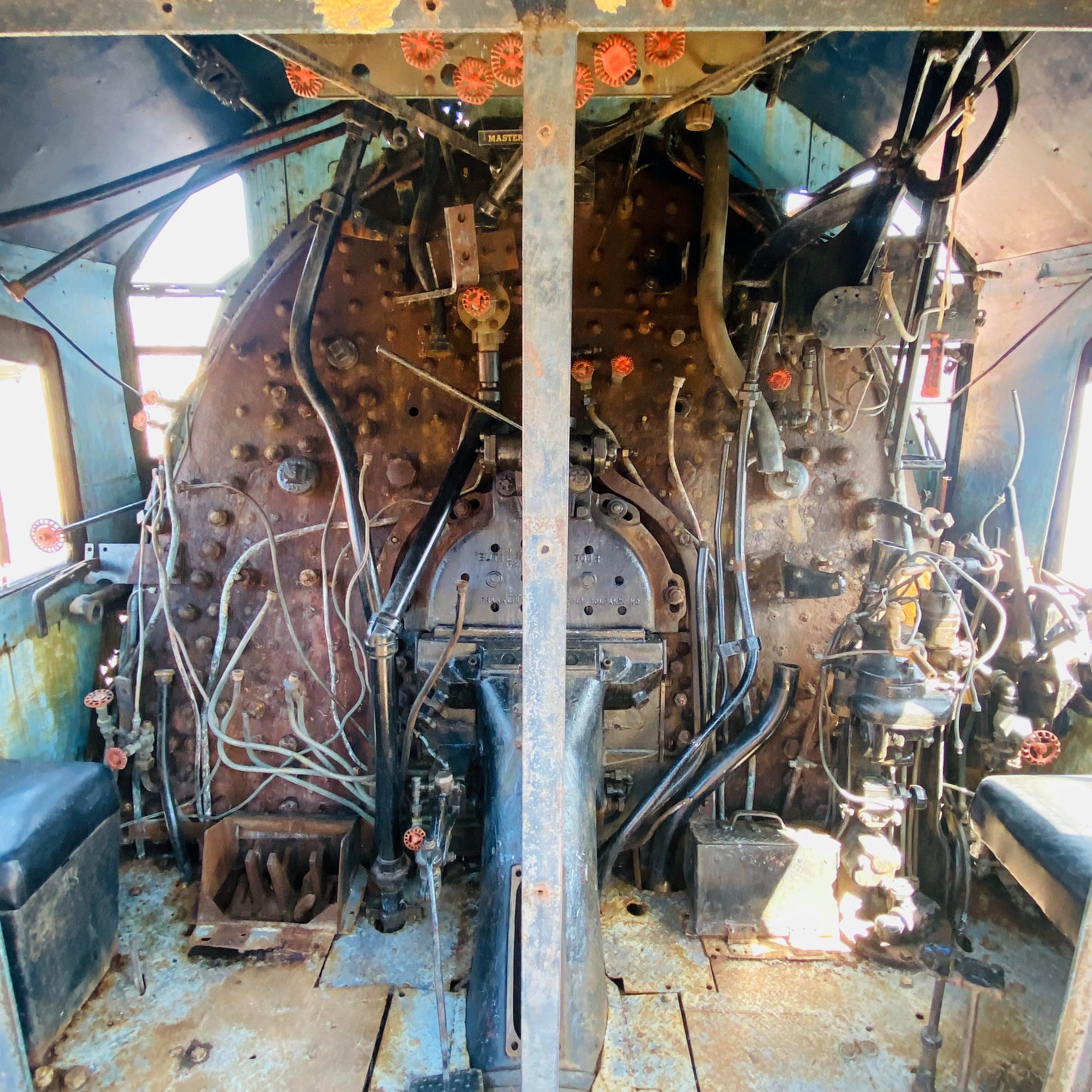
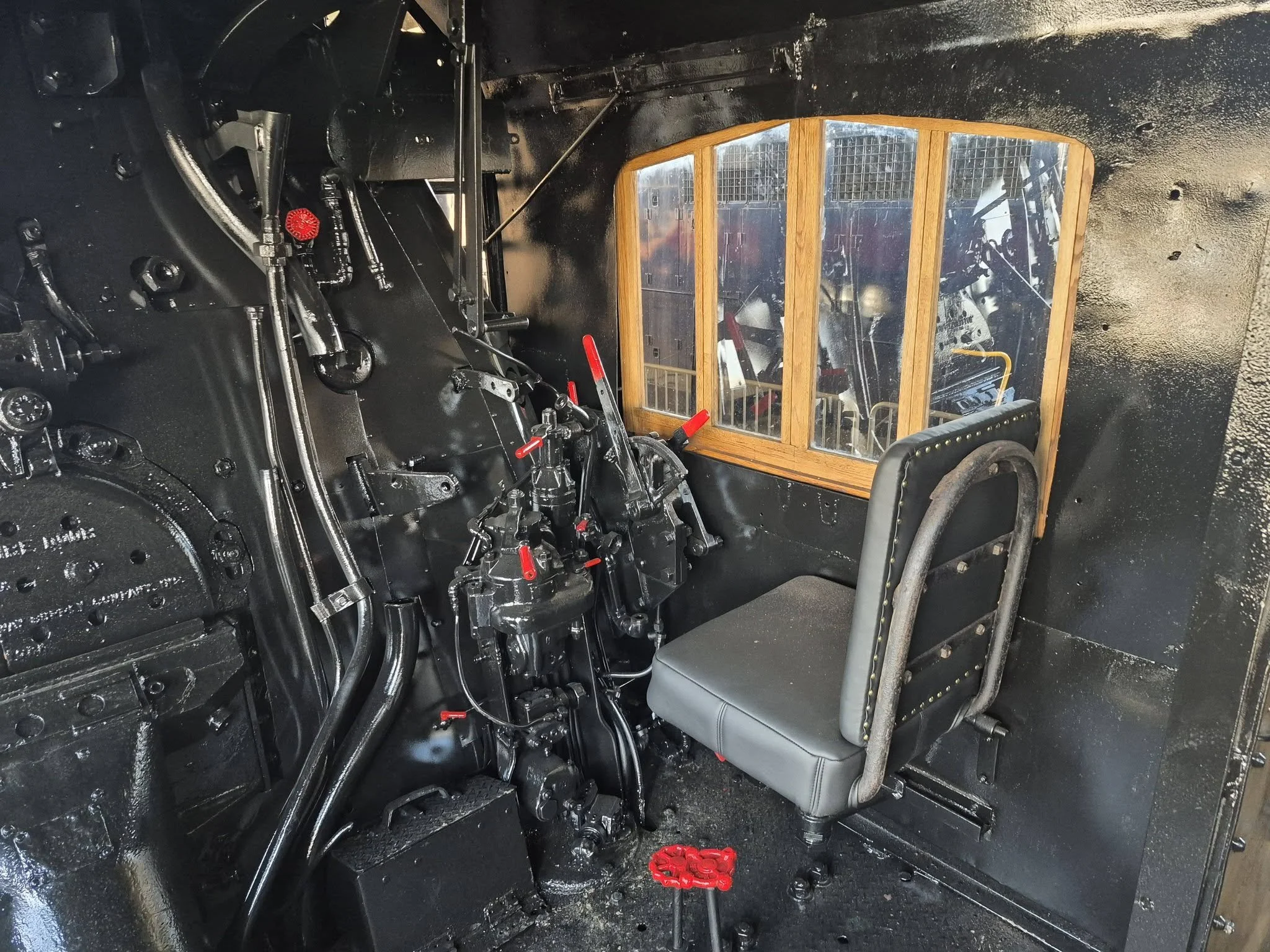
The locomotive’s cab interior also received attention, including restoration of windows, fittings, and interior elements necessary to stabilize the locomotive for long-term display.
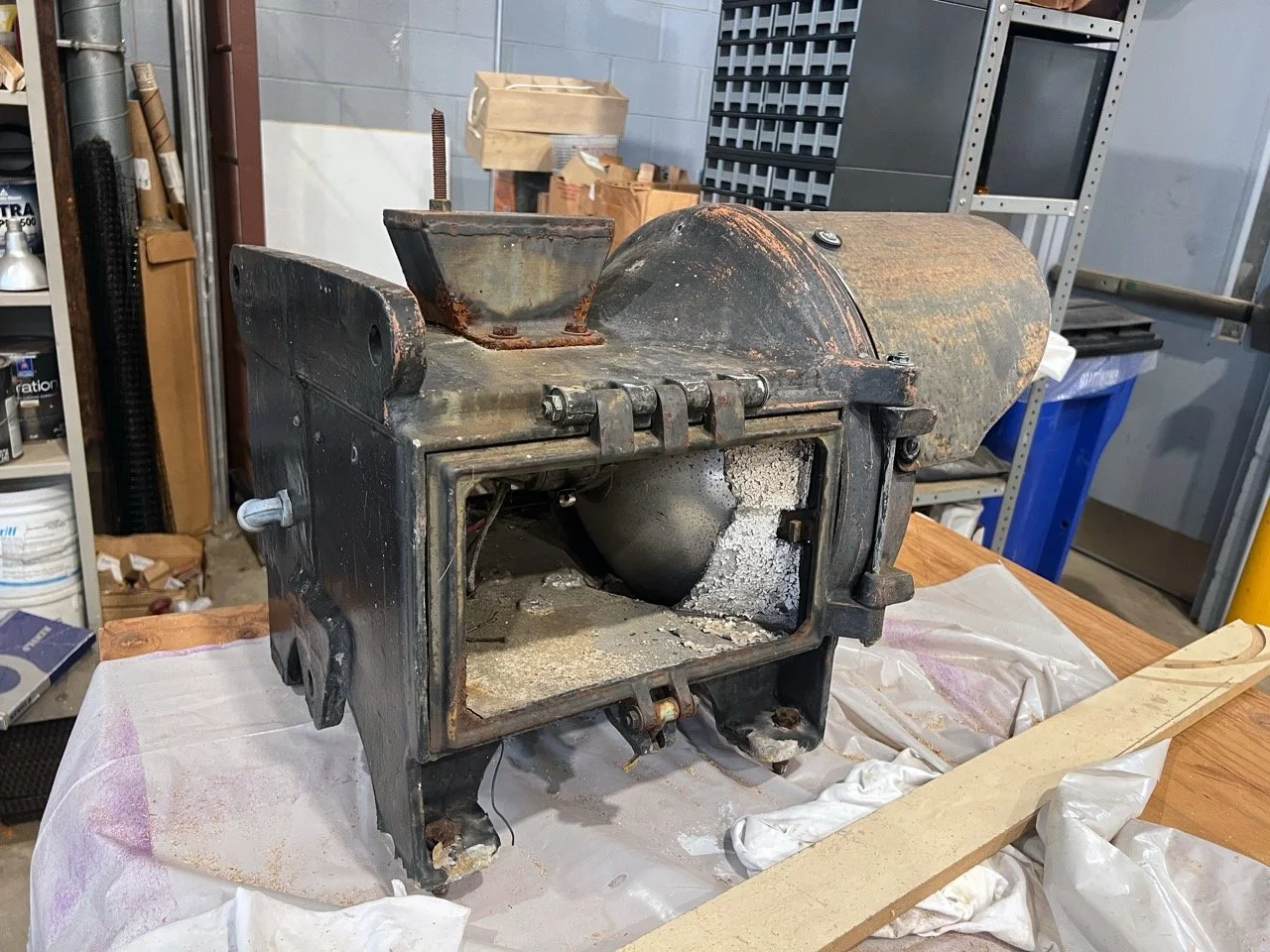
Accessories that define the locomotive’s public appearance — including the headlight, bell, marker lamps, and number boards — were restored or recreated, and reinstalled as the locomotive began to regain its familiar silhouette. Lighting systems were also rewired and conduit run to a discrete location under the smokebox for easy access, so that the locomotive’s headlight, class lights, and number boards, and so they could once again illuminate while the locomotive is displayed.
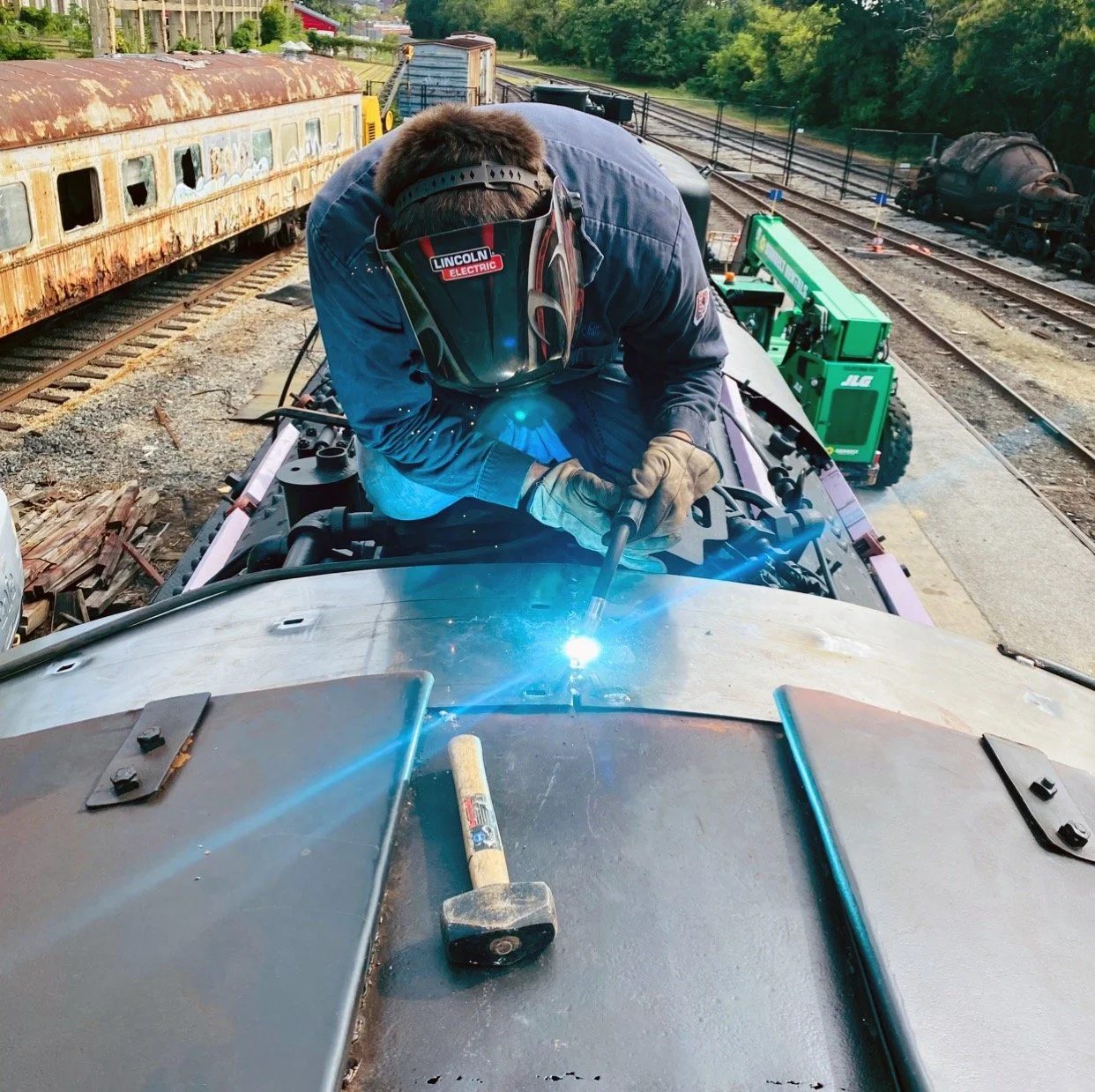
RECREATING THE FREEDOM TRAIN APPEARANCE
With structural work complete, attention turned to recreating the locomotive’s distinctive 1976 American Freedom Train paint scheme.
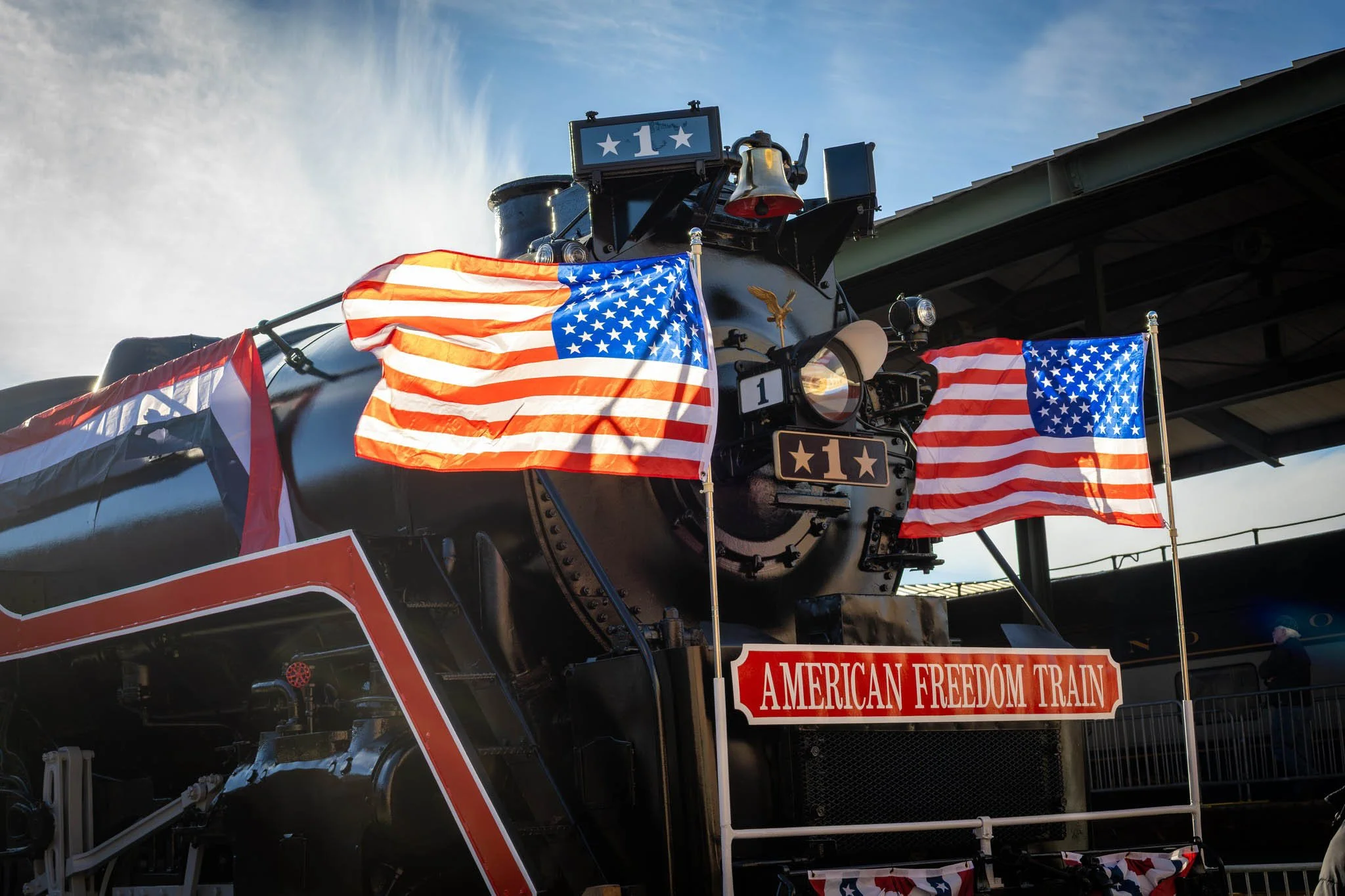
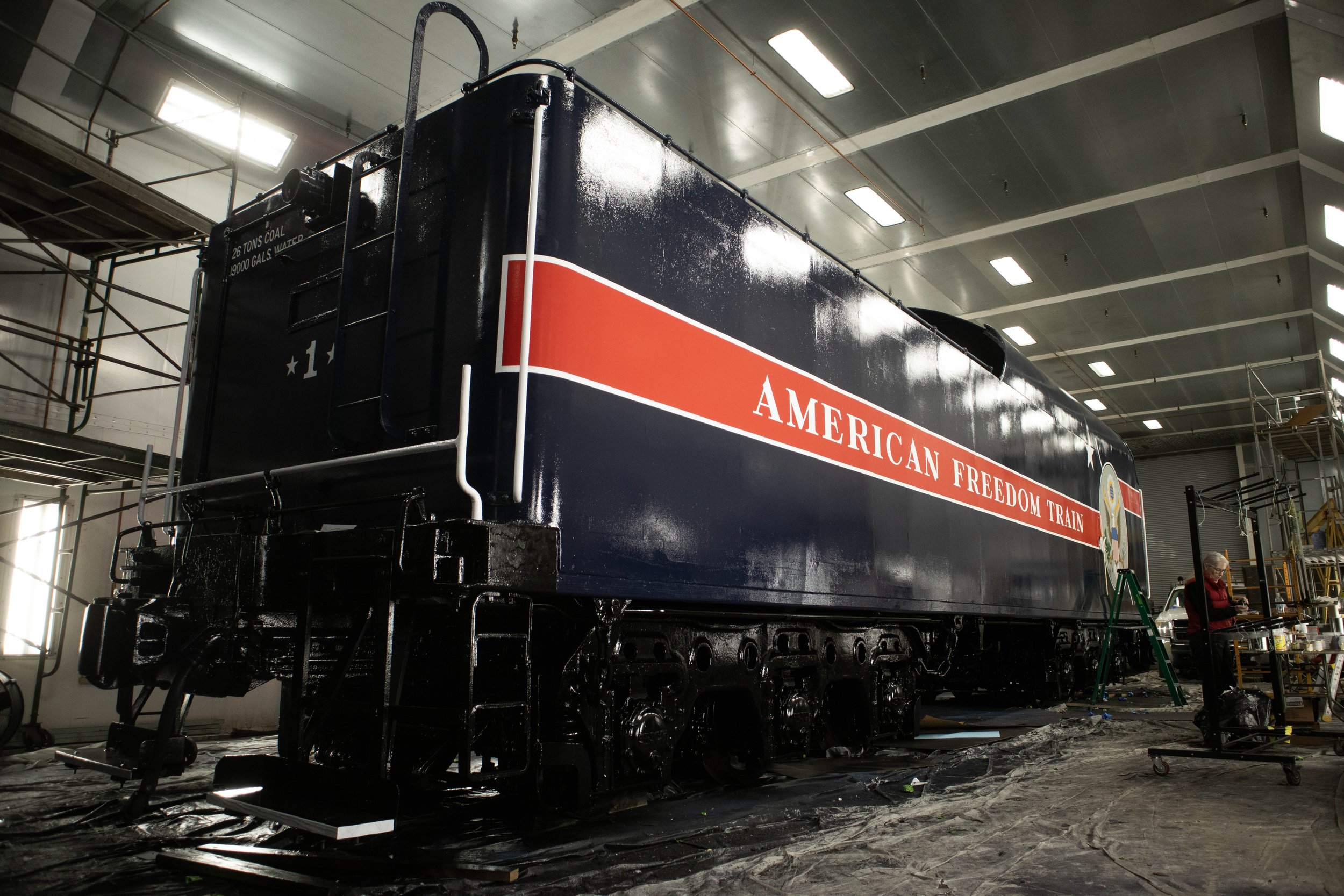
Working in consultation with archival references, FMW applied modern commercial polyurethane coatings designed to provide long-term durability. The locomotive’s running gear, boiler barrel, smokebox, pilot, and cab interior were finished in historically appropriate colors, while the boiler jacket and tender were painted in the bold patriotic livery associated with the Bicentennial train.
THE GREAT SEAL OF THE UNITED STATES
The most recognizable feature of American Freedom Train No. 1 is the large Great Seal of the United States displayed on the locomotive’s tender. The seal itself traces its origins to the earliest years of the United States. After several design committees and years of debate, the Continental Congress formally adopted the Great Seal in 1782 as the official emblem of the new nation. Featuring the bald eagle, olive branch, arrows, and the motto E Pluribus Unum, the seal has long symbolized both the unity and sovereignty of the United States.
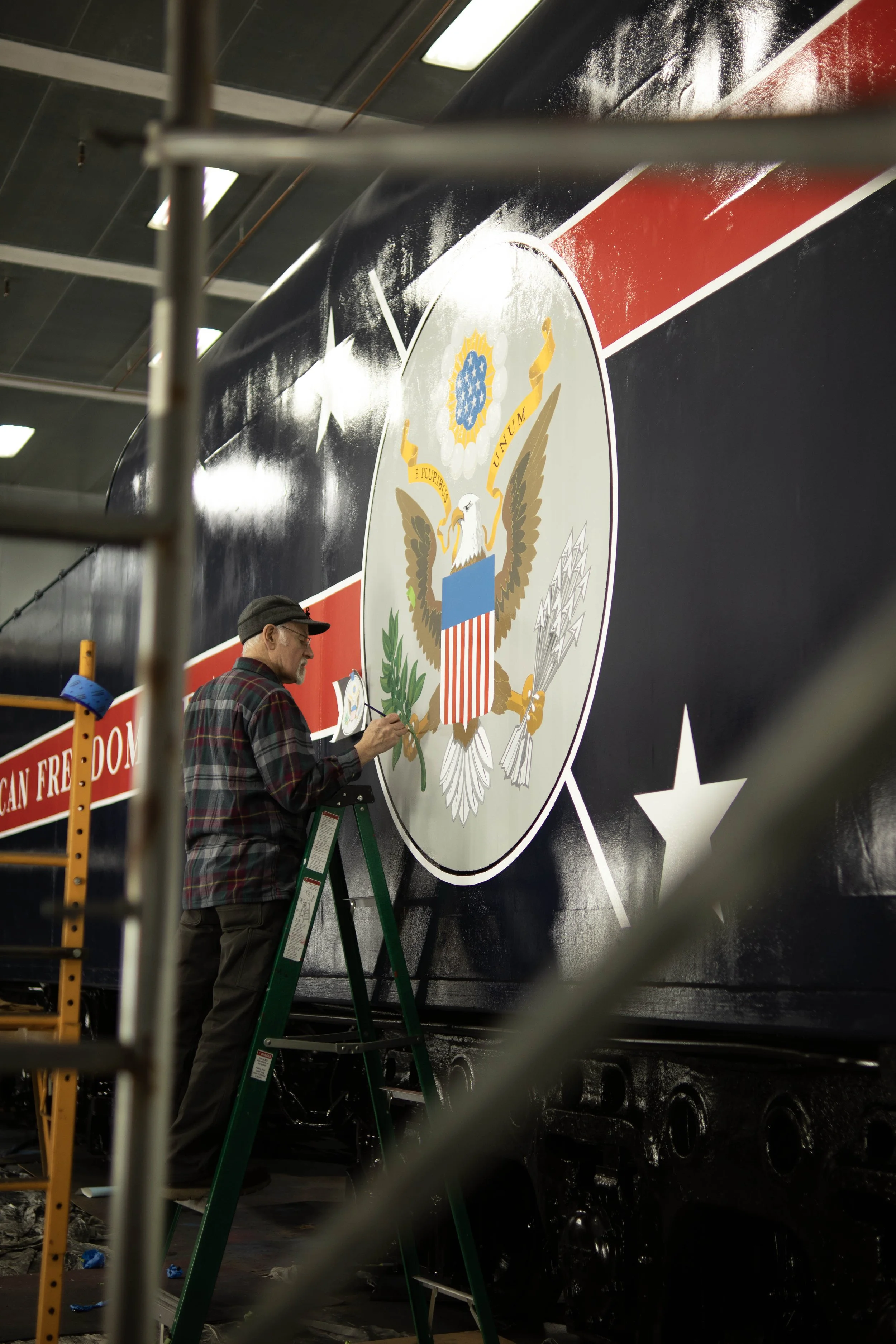
Rather than reproducing the seal with modern graphics or vinyl decals, the project returned to the traditional method used during the Freedom Train era: hand painting.
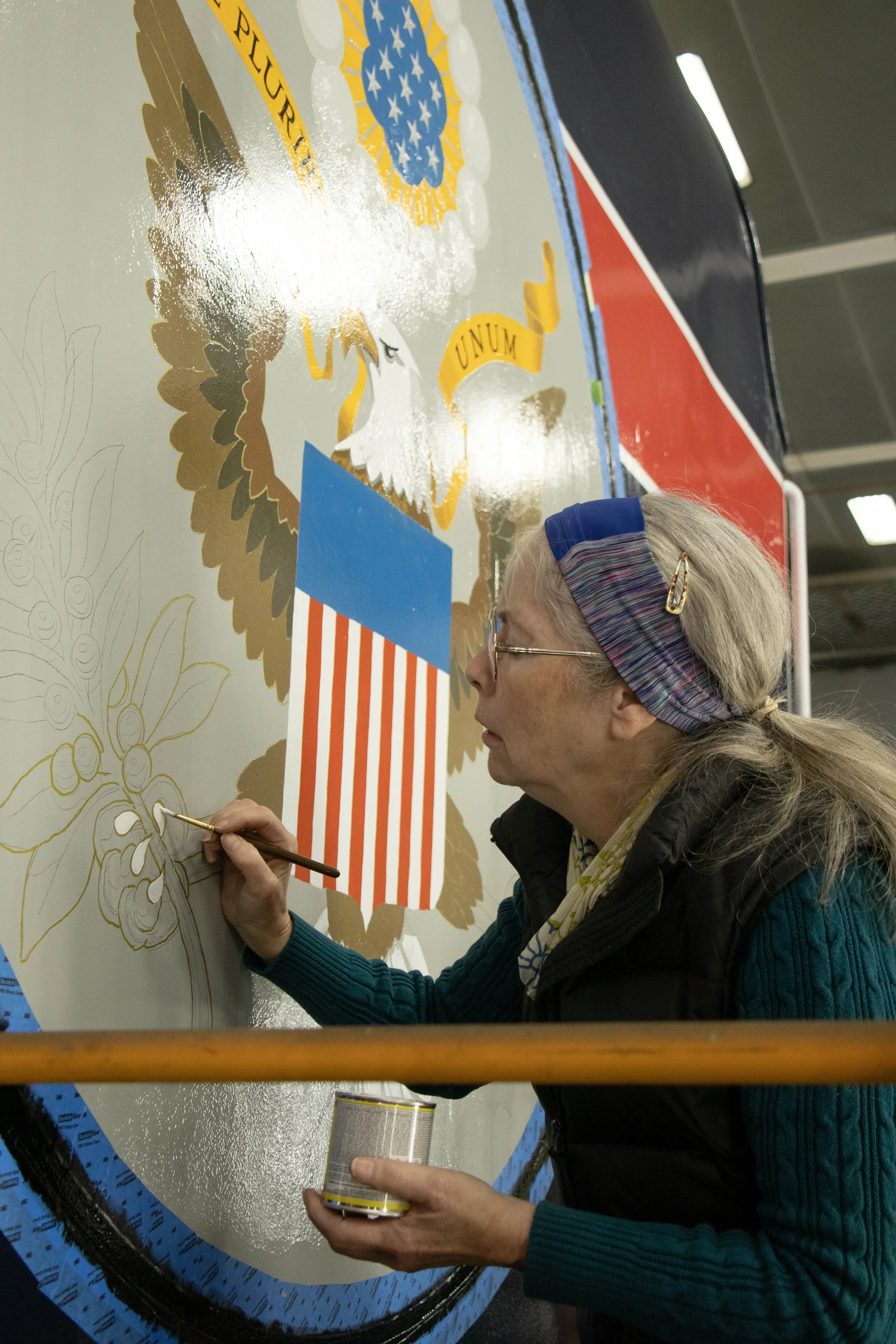
Through longstanding relationships within the preservation community, FMW’s restoration team entrusted this final piece to nationally recognized fine artists David and Liné Tutwiler, whose connection to the original Freedom Train era runs deep.
Working from scaffolding alongside the locomotive, the artists carefully recreated the seal using traditional techniques, including detailed layout work, hand painting, and gold leaf finishing.
The result is a faithful recreation of one of the most recognizable symbols ever carried by a steam locomotive.
A NATIONAL ARTIFACT PRESERVED
The restoration of American Freedom Train No. 1 was greatly assisted by a Save America’s Treasures grant administered by the Institute of Museum and Library Services, which helped support the preservation effort. At one point during the project, that funding briefly faced uncertainty during broader discussions over federal spending — an ironic moment for a project dedicated to celebrating American history. It served as a reminder that preserving the nation’s heritage often depends on a partnership between public programs, private donors, and the institutions committed to safeguarding these artifacts.
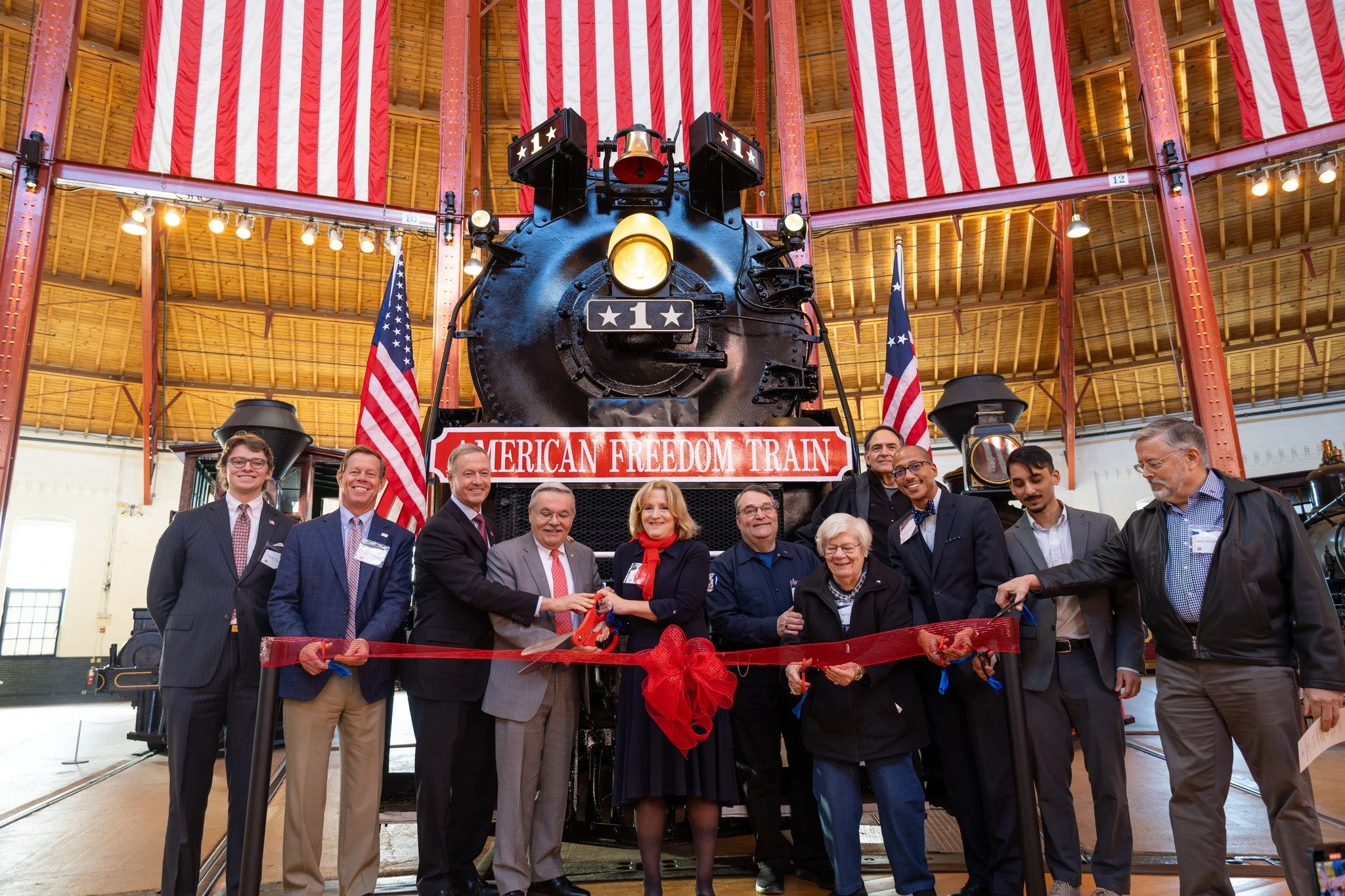
Today, the locomotive once again stands in its ceremonial dress — the same striking patriotic appearance that millions of Americans saw when the American Freedom Train traveled the country nearly fifty years ago.
Importantly, we heard from several surviving American Freedom Train Crew, including the Crew Chief who supervised No. 2101 during its brief, renewed career, all of whom had gathered for the unveiling on January 11th, 2026. Their heartfelt appraisal was the final judgment:
“It brought a tear to our eyes. You guys did a magnificent job. Bob Lorenz [the original painter of the Great Seal] would be proud. Thank you for the care and consideration you gave to this historical monument. It’s excellent work and a tribute to the skill and craftsmanship of your crew.”
COSMETIC LOCOMOTIVE RESTORATION SERVICES
Projects like the rehabilitation of American Freedom Train No. 1 illustrate the specialized work required to preserve historic railroad equipment.
Cosmetic locomotive restoration often involves far more than repainting. Stabilizing historic locomotives typically requires extensive disassembly, fabrication of replacement components, historically accurate finishes, electrical work, and careful coordination with museum curators, preservation professionals, and contractors.
FMW Solutions provides steam locomotive cosmetic restoration services, mechanical consulting, and railroad preservation support for museums, foundations, municipalities, and railroad organizations across North America. These projects frequently involve stabilizing outdoor display locomotives, recreating historic paint schemes, fabricating replacement sheet-metal components, and ensuring that historic railroad equipment can be safely preserved for public interpretation.
The restoration of American Freedom Train No. 1 demonstrates how thoughtful preservation can ensure that historic locomotives continue to tell their stories long after their days of operation have passed.
Nearly fifty years after the American Freedom Train first carried the story of the nation across the rails, that story is ready to be seen again.